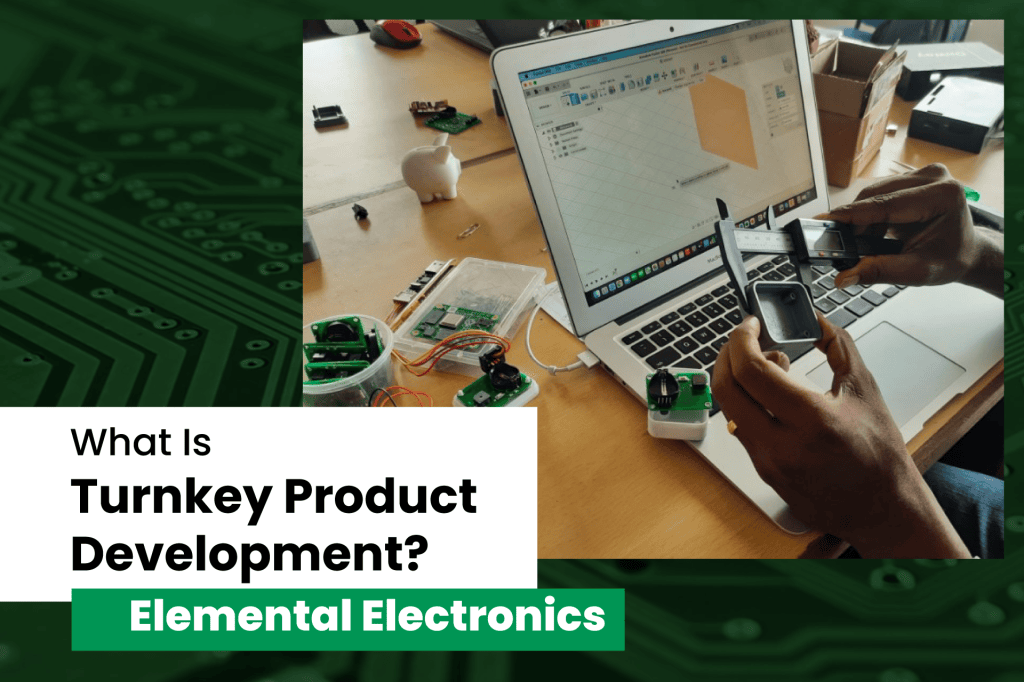
Creating a new product from the ground up is a thrilling adventure but also a complicated and sometimes expensive one with many moving parts. From the early conceptual stages to the product actually launching on the market, developing a product can be a lengthy, complicated, and expensive process, especially in the electronic space. This is where turnkey product development comes in: a simple and completely managed flow from concept to completion that minimizes risk and time and keeps companies focused on their core business.
In this blog, we’ll explore what turnkey development is, how it relates to electronics in Australia, and why many more Original Equipment Manufacturers (OEMs) and startups are now looking to turnkey solutions to help them on their end-to-end electronics development journey.
Introduction to Turnkey Services in Australia
Turnkey Product Development refers to a model where a single provider manages all phases of the product lifecycle. It covers everything, from initial idea validation, engineering, and prototyping to product assembly services, certification, and delivery. The goal is to hand over a “ready-to-use” solution without the need for the client to manage multiple vendors or teams.
For Australian OEMs and startups, this approach is increasingly valuable. With high labor costs and strong regulatory standards, managing everything in-house or juggling several suppliers can be inefficient and risky. A turnkey model ensures consistency, quality, and better communication, all while reducing the management burden. It also helps emerging companies compete with global players by giving them access to advanced tools, specialized teams, and established turnkey electronics manufacturing infrastructure.
Why Turnkey Development Matters in Electronics
Faster Time-to-Market
In the current competitive electronics market, speed is critical. Launches need to be done before your competition; it means you can capture market share and react faster to customer feedback. Turnkey Product Development accelerates design, prototyping, testing, and manufacturing by simplifying the process of moving between stages. With fewer delays and less waste, your idea gets from the whiteboard to the warehouse faster.
Centralized Accountability
It is common to have multiple suppliers when working on a new product, which leads to a blame game when something goes wrong. Turnkey services eliminate the blame game by assigning one team the whole project from start to finish. This team is responsible for the final result. If something goes wrong, that team will lead to faster resolutions with all the appropriate stakeholders. With everyone focusing on the same goal, accountability leads to quality, which is critical when working with electronics.
Cost Efficiency
Although it may seem more costly up front, full-cycle product design under a turnkey model can actually lead to lower total cost. You remove duplication of work, miscommunication, and delays caused by coordinating efforts between separate teams. Providers also leverage DFM at a much earlier stage for design to optimize material selection, reduce wastage, and reduce production costs. Using DFM, once combined with EMS, can give better material sourcing, quicker builds and fewer revisions.
Key Stages in Turnkey Product Development
Let’s explore what happens behind the scenes when you engage a turnkey partner for end-to-end electronics development:
Requirement Analysis
Everything begins with, “What does this product need to do?” The development team works with the client to gather all technical and functional requirements for development. This stage is the basis to develop the design and create understanding of expectations and responsibilities with all stakeholders. This is also where a review of risks, budget limitations and timelines is made.
Product Design & Prototyping
With the requirements in place, the team moves into full-cycle product design. This includes electronics schematics, PCB layouts, and firmware or software development. Once the digital design is ready, a working prototype is created. This stage brings the idea to life and allows for early feedback. A prototype helps validate functionality, user experience, and performance before full-scale production.
Engineering Validation
Next comes engineering validation, where the prototype is tested to confirm that it meets design specifications. This step includes electrical testing, thermal analysis, and safety checks. Any issues identified here are addressed before mass production begins. Getting the engineering right early helps prevent costly mistakes later.
Manufacturing & Assembly (EMS & DFM)
Once validated, the design is sent to production. Here, EMS (Electronics Manufacturing Services) providers handle the build, guided by DFM (Design for Manufacturing) principles. DFM ensures that the product is designed for ease of assembly, minimal errors, and efficient production. During this phase, component sourcing, PCB assembly, and firmware loading are handled under strict quality control measures.
The product assembly services team ensures that each unit is built consistently and meets required standards. This is where ideas finally become tangible products.
Testing & Certification
No product leaves the facility without passing through final testing. This includes functional checks, safety testing, and performance validation. If the product needs to meet local or international standards, certification bodies are involved. For Australian companies, this could include compliance with RCM, CE, or other regulatory marks, depending on the target markets.
Packaging & Delivery
Once tested and approved, products are packaged to protect them during transport. Labeling, manuals, and branding are also added here. The final step is delivery, which can be either to the client’s warehouse, directly to retail, or drop-shipped to customers. Every detail is handled so that the product is market-ready upon arrival.
When to Choose a Turnkey Approach
Turnkey development is not the only way to build a product, but it becomes the smarter option in many situations.
It’s ideal for startups with limited engineering teams or companies looking to enter the market quickly. If your internal resources are stretched thin or your team lacks expertise in certain areas, a turnkey partner fills those gaps. It’s also useful for scaling up production without compromising quality.
Another key reason to choose this route is risk management. With one team managing the entire process, there are fewer surprises, smoother transitions, and clearer accountability.
How Turnkey Differs from Traditional Models
In a traditional model, product development often happens in silos. You might have one team doing the design, another handling testing, and a third managing manufacturing. This can lead to communication gaps, duplicated effort, and longer timelines.
Turnkey development connects all the dots from the start. It offers end-to-end electronics development under one roof, with all teams working toward a shared goal. There’s less handoff between stages, which means fewer mistakes and faster delivery. You also avoid the hassle of vendor management, negotiations, and integration headaches.
Elemental Electronics’ Turnkey Process
At Elemental Electronics, Turnkey Product Development is designed with flexibility, speed, and quality in mind. The process starts with a deep dive into your product vision. From there, a cross-functional team is assigned to manage everything, from system design and prototyping to DFM, EMS, and final delivery.
Elemental focuses on full-cycle product design, working closely with you at every step to make sure your goals are met. Their product assembly services are handled in-house or through trusted local and international partners, depending on the scale and complexity.
Testing and certification are built into the timeline, not treated as an afterthought. This ensures that products meet all functional and regulatory benchmarks before shipping. Even post-launch, their team supports refinements, upgrades, or redesigns based on user feedback.
By using a consistent process and a dedicated team, Elemental reduces lead time, improves quality, and ensures that your product reaches the market without delays or surprises.
Conclusion
Turnkey Product Development brings structure, speed, and clarity to the often messy world of electronics design and production. For Australian OEMs and startups, it offers a practical way to build great products without juggling multiple vendors or facing unpredictable delays.
By working with a partner that handles end-to-end electronics development, you can focus on what you do best, which is growing your business and serving your customers. The result is faster product delivery, better performance, and peace of mind knowing that every step is covered. Whether you’re launching your first device or scaling up to meet demand, turnkey development offers the tools and talent to bring your vision to life.